
Home » Products » AI Computing Module » MM3060B6-12G
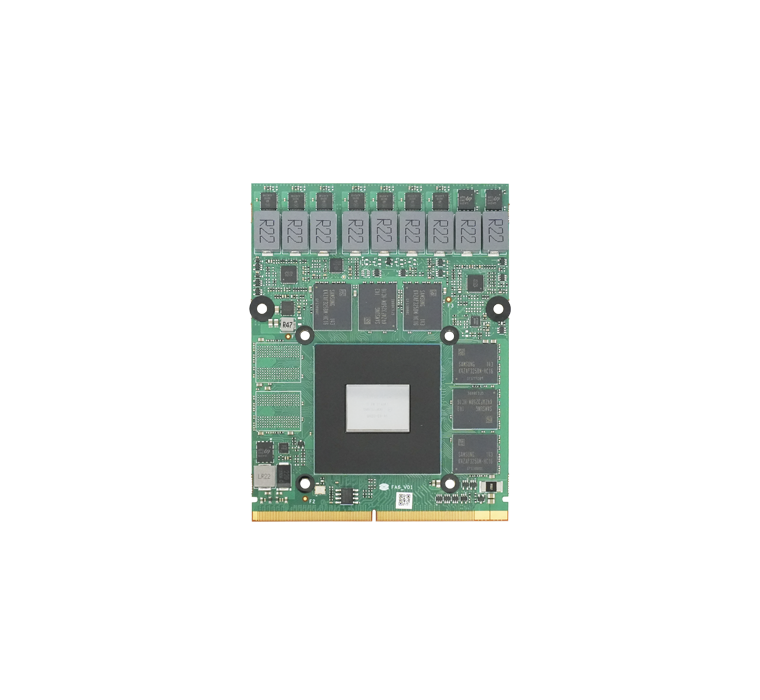
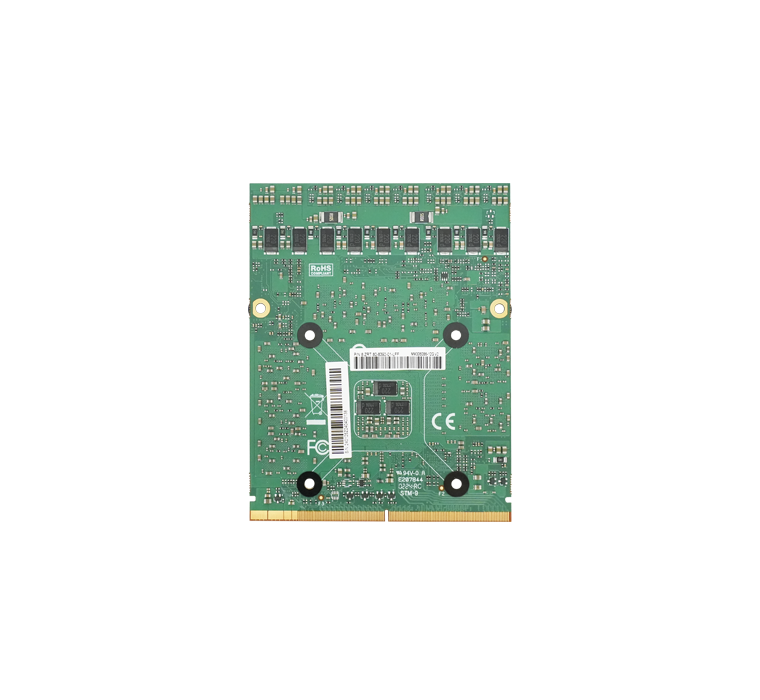
RTX3060m MXM Module
The MM3060B6-12G V2 is equipped with the NVIDIA GeForce RTX 3060 Mobility GPU. Built on the Ampere architecture, it features 3840 CUDA cores, 120 Tensor Cores and 30 RT Cores. The core clock runs at 900 MHz (Boost 1425 MHz), delivering a single-precision floating-point performance of 12.36 TFLOPS. With 12GB GDDR6 192-bit VRAM and a memory bandwidth of 336 GB/s, it efficiently handles medium-to-large 3D scenes, video post-production and edge AI inference tasks.
It adopts the MXM 3.1 Type B standard (105×82 mm) with a PCIe 4.0 x16 bus. It supports 2× DP 1.4++, 1× HDMI 2.1 and 1× DP 1.4++ outputs. DP supports up to 7680×4320@120 Hz, while HDMI reaches a maximum of 8K@60 Hz. TDP is 100 W (75 W low-power mode optional), offering flexible compatibility with various thermal dissipation solutions.
It supports Windows 10/11 and Linux operating systems. The operating temperature ranges from 0°C to 45°C (-20°C wide-temperature version optional). It is suitable for professional graphics applications including mid-to-high-end industrial vision equipment, medical imaging terminals, mobile workstations, and embedded AI inference platforms.
Product Features
- NVIDIA Ampere Architecture, NVIDIA GeForce RTX 3060 Mobility GPU
- 12GB GDDR6 192-bit VRAM
- 3840 CUDA Cores, 120 Tensor Cores, 30 RT Cores
- MXM 3.1 Type B (105×82 mm)
- 2× DisplayPort 1.4++ + HDMI 2.1 + DisplayPort 1.4++
- TDP 100 W (optional 75 W)
he MM3060B6-12G V2 is equipped with NVIDIA GeForce RTX 3060 Mobility GPU. Built on the NVIDIA Ampere architecture, this MXM graphics card packs 3840 CUDA cores, 120 Tensor Cores and 30 RT Cores. It runs at a core clock of 900 MHz (Boost 1425 MHz), delivering a single-precision floating-point performance of 12.36 TFLOPS.
Featuring 12GB GDDR6 192-bit VRAM with 336 GB/s memory bandwidth, the MM3060B6-12G V2 efficiently processes medium-to-large 3D scenes, video post-production and edge AI inference tasks for industrial and embedded applications.
Built to the MXM 3.1 Type B form factor (105×82 mm), this graphics card uses a PCIe 4.0 x16 bus. It delivers 2× DP 1.4++, 1× HDMI 2.1 and 1× DP 1.4++ display outputs. DP supports up to 7680×4320@120 Hz resolution, while HDMI achieves a maximum of 8K@60 Hz. The standard TDP is 100 W with an optional 75 W low-power mode, enabling flexible deployment under various thermal dissipation environments.
It supports Windows 10/11 and Linux operating systems. The standard operating temperature ranges from 0°C to 45°C, with an optional -20°C wide-temperature variant. Ideal for professional graphics applications including mid-to-high-end industrial vision equipment, medical imaging terminals, mobile workstations, and embedded AI inference platforms.
| Model | MM3060B6-12G V2 (RTX3060) |
| GPU Architecture | NVIDIA Ampere |
| GPU Model | NVIDIA GeForce RTX 3060 Mobility |
| VRAM Capacity | 12GB |
| VRAM Type | GDDR6 |
| VRAM Bus Width | 192-bit |
| Memory Bandwidth | 336GB/s |
| Core Clock (Base/Boost) | 900/1425 MHz |
| Memory Clock | 1750 MHz (14.0Gbps) |
| CUDA Cores | 3840 |
| Tensor Cores | 120 |
| RT Cores | 30 |
| TMUs | 120 |
| ROPs | 48 |
| SM Count | 30 |
| L1 Cache | 128KB(per SM) |
| L2 Cache | 3MB |
| PCIe Interface | PCI Express 4.0 x16 |
| MXM Form Factor | MXM 3.1 Type B |
| Size | 105 × 82mm |
| Display Outputs | 2× DisplayPort 1.4++ + HDMI 2.1 + DisplayPort 1.4++ |
| DP Resolution | 7680×4320@120Hz |
| HDMI Resolution | 7680×4320@60Hz |
| Max Display | 4 displays |
| TDP | 100W (75W optional) |
| External Power Supply | DC 12~19V, 3.3V & 5V ±5% |
| Pixel Fill Rate | 68.4 GPixel/s |
| Texture Fill Rate | 171.0 GTexel/s |
| Single Precision (FP32) | 12.361 TFLOPS |
| Double Precision (FP64) | 241.8 GFLOPS |
| DirectX | 12 Ultimate (12_2) |
| OpenGL | 4.6 |
| OpenCL | 3.0 |
| Vulkan | 1.3 |
| Shader Model | 6.7 |
| CUDA Version | 8.6 |
| Operating System | Windows 10/11 64-bit, Linux |
| Operating Temperature | 0°C ~ 45°C (-20°C optional) |
| Storage Temperature | -20°C ~ 75°C |
| Operating Humidity | 0%~95% (non-condensing) |
| Storage Humidity | 10%~90% |
| Supply Voltage | DC 12~19V, 3.3V & 5V ± 5% |
8.ZRT.80-8392-01-LFF(FA6 RTX3060m 12G 192bit GDDR6 DP+DP+HDMI+DP MXM Type B 100W Color Box, 20 pcs per carton)
8.ZRT.80-8392-00-LFF(FA6 RTX3060m 12G 192bit GDDR6 DP+DP+HDMI+DP MXM Type B 75W Color Box, 30 pcs per carton(Windows))
Technical Documentation
Contact Us
- Get A Quote
- mkt@zrt-tech.com
- 400-838-6869
- 21st Floor, Tower A, Country Garden Phoenix Intelligent Valley, Baoan District, Shenzhen
FAQ
Answers to common questions about this product. For further details, contact our technical support team.
What GPU architecture and key specifications does the RTX 3060M MXM module use?
The RTX 3060M MXM module (MM3060B6-12G V2) is built on the NVIDIA Ampere architecture with the GeForce RTX 3060 Mobility GPU. It features 3,840 CUDA cores, 120 Tensor cores, and 30 RT cores, delivering 12.36 TFLOPS of single-precision floating-point performance at a 900 MHz base clock (1425 MHz boost). It is equipped with 12GB of GDDR6 memory on a 192-bit bus, providing a memory bandwidth of 336 GB/s.
What MXM standard does this module follow, and is it compatible with my embedded system?
The module adopts the MXM 3.1 Type B standard (105×82 mm) with a PCIe 4.0 x16 bus, making it compatible with MXM 3.1 Type B slots in industrial PCs, mobile workstations, and embedded platforms. Its TDP is 100 W with an optional 75 W low-power mode, offering flexible compatibility with various thermal dissipation solutions. It supports Windows 10/11 and Linux operating systems, with an operating temperature range of 0°C to 45°C (an optional -20°C wide-temperature version is available).
What display outputs and application scenarios does the RTX 3060M MXM module support?
The module provides 2× DisplayPort 1.4++, 1× HDMI 2.1, and 1× additional DP 1.4++ output. DisplayPort supports up to 7680×4320@120 Hz, while HDMI reaches a maximum of 8K@60 Hz. It is ideal for professional graphics applications including mid-to-high-end industrial vision equipment, medical imaging terminals, mobile workstations, video post-production, edge AI inference platforms, and 3D rendering tasks.
Can't find the answer you need? Our team is happy to help with product selection and customization.