

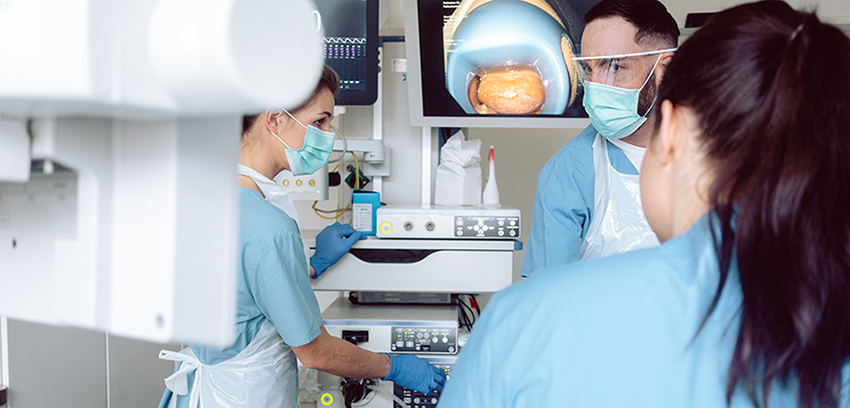
Traditional endoscopic 2D imaging has been upgraded to glasses‑free 3D display. Surgeons are no longer required to wear 3D glasses or headsets, as anatomical structures within the surgical field and human tissues can be directly presented in authentic stereoscopic 3D views. This innovative glasses‑free 3D endoscope delivers superior imaging performance while effectively reducing clinician fatigue and physical discomfort, making it highly suitable for clinical operations. Even so, glasses‑free 3D endoscopes still face inherent hardware challenges in rendering realistic, high‑fidelity 3D images.
1. Higher Requirements & Greater Challenges
Compared with conventional endoscopes, glasses-free 3D endoscopes produce more realistic and stereoscopic medical imagery, requiring devices to output high-resolution and high-frame-rate 3D images consistently. In addition, endoscopes feature compact and lightweight designs, which demand high-performance AI hardware with powerful main control capabilities in a miniature form factor to maintain outstanding image processing quality and efficiency. Moreover, sustained stable operation in confined spaces is essential, making thermal management a core technical priority for device design.
2. Partnership to Break Through Technical Barriers
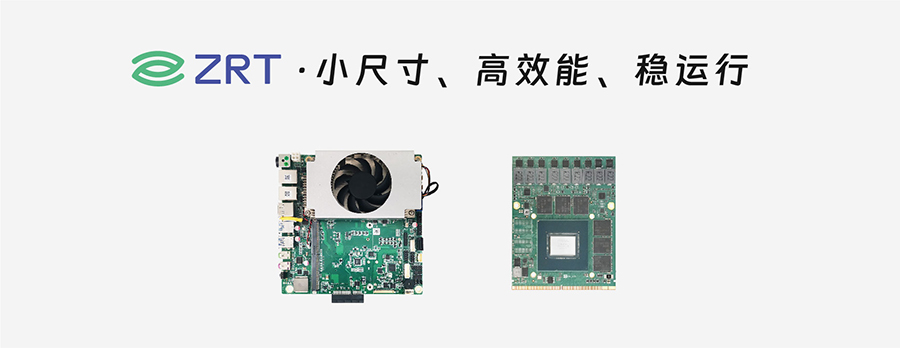
To address the above‑mentioned challenges, a well‑known domestic medical‑device manufacturer has adopted ZRT’s combined AI hardware suite for its self‑developed glasses‑free 3D endoscope, consisting of the EMA-7103 industrial AI motherboard paired with the MM3060B6-12G MXM discrete GPU. Compact yet high‑performance, this hardware suite fits perfectly within the confined installation footprint of endoscope equipment. It effectively mitigates multiple pain points including sub‑par medical‑image quality, latency, frame stuttering and system instability.
3. Innovative Design & Comprehensive Performance
The EMA-7103 is a standard 7-inch (170 × 170 mm) Mini-ITX motherboard powered by Intel Tiger Lake-H low-power processors. It adopts a dual-channel DDR4 memory design with a maximum capacity of 64GB. The board supports discrete graphics output via LVDS, DP and HDMI, as well as integrated graphics output through eDP. Equipped with an MXM slot, it enables flexible swapping of MXM graphics modules.
The MM3060B6-12G graphics card is built with the NVIDIA GeForce RTX3060 GPU. With a compact dimension of only 105 × 82 mm, it is configured with 12GB 192-bit GDDR6 video memory and integrates 3584 CUDA cores, 120 Tensor Cores and 30 RT Cores, delivering a peak single-precision floating-point performance of up to 13863 GFLOPS.
The combined AI‑hardware suite built around the EMA-7103 motherboard and MM3060B6-12G GPU delivers robust aggregate computing power with outstanding energy‑efficiency performance for glasses‑free 3D endoscopes. Capable of rapid image‑data processing, it fulfills clinicians’ on‑demand image processing and computational requirements throughout surgical workflows, effectively reducing frame stuttering and signal latency. It also supports premium‑quality graphics output, real‑time ray tracing and AI‑accelerated image rendering, producing sharper, stereoscopic 3D medical imagery to boost the accuracy and efficiency of clinical diagnosis and intervention.
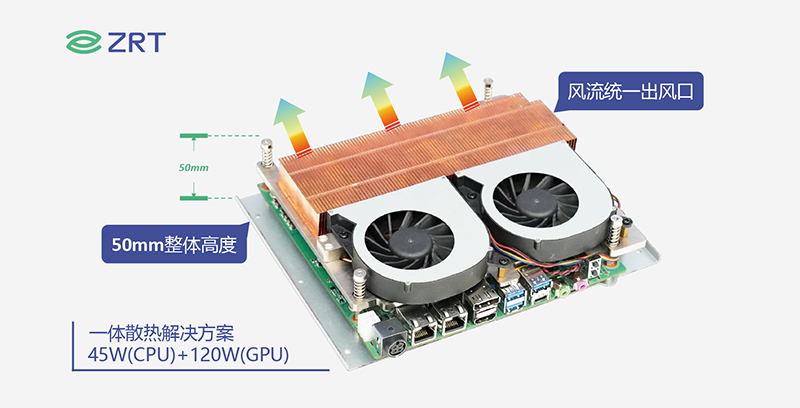
Despite its compact footprint, this hardware suite leverages a custom‑developed integrated low‑profile thermal solution from ZRT. It successfully mitigates thermal risks arising from confined enclosure space and prolonged operational hours, sustaining consistent, reliable device performance during extended runtime.
Empowered by ZRT’s high-performance AI hardware, the glasses-free 3D endoscope achieves significant improvements in surgical efficiency and operational safety. It also greatly optimizes the intraoperative experience for surgeons, enabling them to concentrate fully on surgical procedures and ultimately deliver superior medical treatment experiences for patients.