Customer Case

ZRT Laparoscopic surgery monitor heart hospital
Application

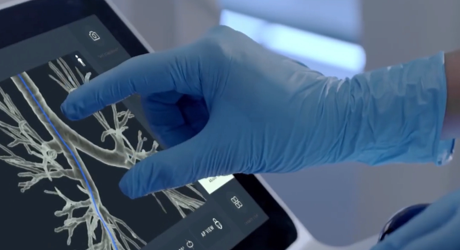
ZRT Graphics Card Optimizes lVUS System Performance

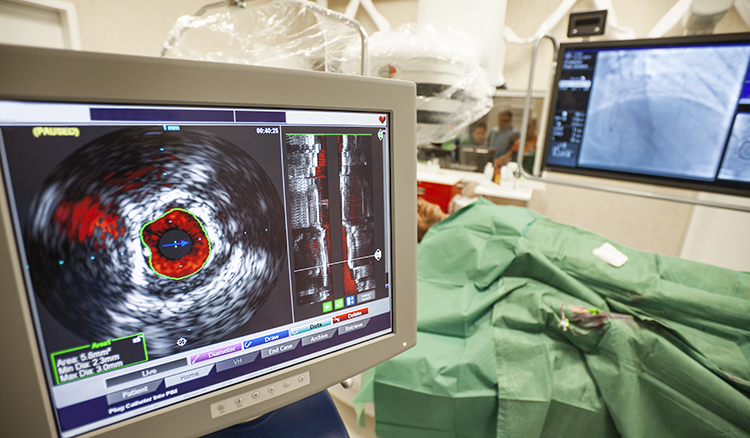
Intravascular Ultrasound(IVUS) systems are medical devices that visaualize inner-vessel imagery.They are widely used in the diagnosis and treatment of coronary heart disease,myocardial infarction and vascular stenosis. Nevertheless,IVUS systems face significant hardware-level challenges.First high-performance computing is required to process masssive image datasets at high speed.Second,deployed in clinical settings for prolonged continuous operation,the systems must deliver high stability and reliability,Third,high-quality image rendering capability is essential to deliver accurate patient data for clinicias.   To address the above technical challenges,a medical device enterprise has integrated ZRT’s GTX1050Ti 4GD5 PCle graphics card into its IVUS system.Serving as the core for image processing and display,the ZRT graphics card delivers robust computing power and high-fidelity image output,which effectively upgrades the overall system performance of IVUS medical equipment. Equipped with ZRT’s GTX1050Ti 4GD5 PCle graphics card, the IVUS system leverages the card’s powerful computing capacity and efficient graphics processing to rapidly process large-volume image data and generate high-resolution interavascular images.It also delivers real-time visualization of vascular structures,enabling clinicians to assess patient conditions promplty. Meanwhile, the graphics card features outstanding stability and reliability for long-duration continuous operation,ensuring consistent IVUS system performance.Furthermore,it supports user-friendly UI and interactive functions,allowing physicians to operate the device and review imaging data with greater ease.   The ZRT NVIDIA GeForce GTX1050Ti 4GD5 graphics card is built around the NVIDIA GeForce GTX1050Ti GPU,feating 768 CUDA cores.It comes with 4GB GDDR5 video memory,a 128-bit memory bus,and a core clock ranging from 1354MHz to 1468 MHz.Display outputs include DP, HDMI and DVI interfaces. Accordingly,adoption of the GTX1050Ti 4GD5 card delivers notable improvements in image quality and real-time perfoemance for the IVUS system.In clinical practice,this helps clinicians identify and evaluate lesions such as vascular stenosis and plaques with higher accuracy,formulate more targeted treatment plans,and improve therapeutic outcomes.
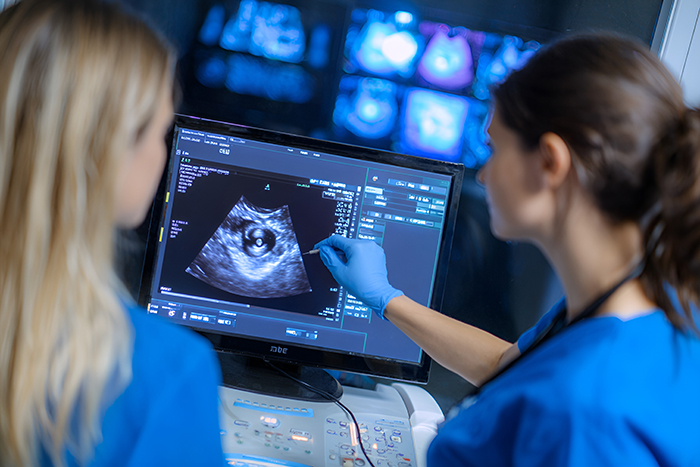
ZRT Medical Ultrasound System 2
Application

Medical Ultrasound System

Widely applied in medical diagnosis and industrial inspection,ultrasound equipment serves as an indispensable tool thanks to its non-invasive,real-time and high-effciency features.However,continuous technological advances and growing application demands have brought multiple hardware challenges to ultrasound devices.These bottlencks not only  limit equipment performance but also compromise the accuracy and efficiency of diagnostics.   Application Pain Points Solution: As an indispensable part of modern clinical examinations, medical ultrasound equipment is undergoing unprecedented transformation with continuous technological iterations and the in-depth application of AI technologies. Amid this wave of technological innovation, a well-known ultrasound equipment manufacturer in Chengdu has adopted PCIe GPUs from ZRT ——GTX1650 4GD5 VPH,as the core hardware within ultrasound devices,it successfully addresses the pain points faced by ultrasound equipment. GTX1650 4GD5 VPH boasting outstanding graphics processing and parallel computing capabilities,the brand’s ultrasound system has achieved remarkable improvements in multiple aspects after integrating this GPU.Clinicians’ satisfaction with ultrasound images has greatly increased,and diagostic accuracy is guaranteed.Faster image processing shortens diagnostic time and improves clinical efficiency.Enhanced system stability reduces medical service interruptions caused by equipment failures and elevates the overall quality of medical services.  

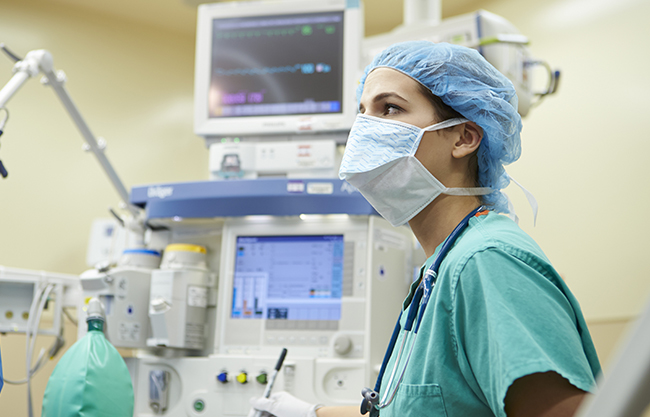
ZRT Anesthetist Working In Operating Theatre
Application

Anesthesia Workstation

An anesthesia workstation is an integrated medical device that combines anesthesia gas delivery,respiratory support,patient monitoring and data recording.Deployed in operating rooms,ICUs and other settings,it provides anesthesia management for patients.With continouns advances in medical technology,requirements for the performance and intelligence of anesthesia workstations are rising steadily,and traditional anesthesia workstations have gradually revealed certain application limitations.   Application Pain Points: Bottleneck in data‑processing speed: Insufficient capacity for real‑time processing and precise analysis of multi‑parameter signals Limitations in graphics display quality: Difficulty balancing high‑resolution waveform rendering and multi‑parameter on‑screen simultaneous display Poor connectivity and expandability: Failure to meet requirements for efficient interconnection and data sharing with other medical devices Solution: To address the application limitations of conventional anesthesia workstations, a well‑known domestic medical device manufacturer selected our AMR‑platform motherboard R1-358801 as the core component for its new‑generation anesthesia workstation. This has achieved comprehensive upgrades and performance breakthroughs for the anesthesia workstation, meeting the urgent demand for efficient, precise and intelligent anesthesia workstations in modern operating rooms. Powered by the RK3588 processor,the R1-358801 motherboard delivers formidable computing power for fast real‑time processing of multi‑parameter signals from anesthesia workstations, effectively breaking the bottleneck in data‑processing speed. Its built‑in high‑performance GPU enables crisp rendering of high‑resolution waveforms and improves graphics display quality. In addition, the motherboard is equipped with abundant high‑speed data‑transmission interfaces to connect various medical peripherals effortlessly. It facilitates the construction of a medical IoT ecosystem, realizing efficient inter‑device interconnection and data sharing to satisfy connectivity and expandability requirements in medical scenarios.  

Scroll to Top